

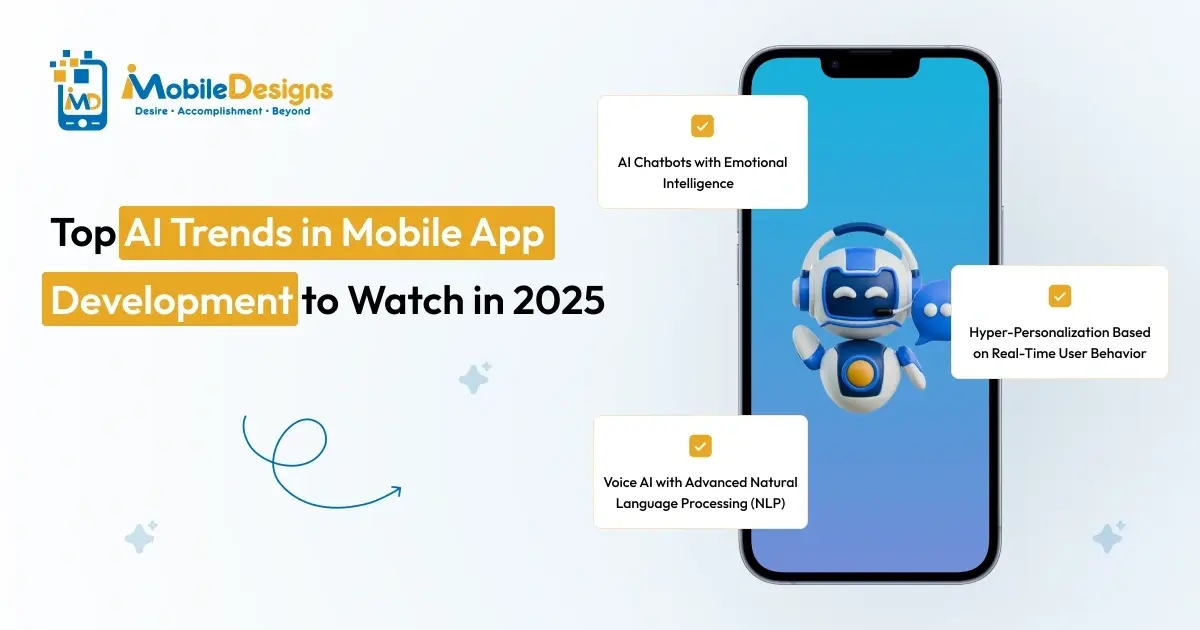
Explore key AI trends in mobile app development for 2025, from emotional chatbots to voice AI and hyper-personalization.
The mobile app development landscape is undergoing a transformative shift in 2025, driven by breakthroughs in artificial intelligence (AI). As businesses seek to deliver seamless, personalized, and intelligent user experiences, AI has become central to innovation. From emotionally intelligent chatbots to predictive analytics and voice-enabled interfaces, AI is redefining how mobile apps are built, function, and interact with users.
In this comprehensive guide, we explore the top AI trends in mobile app development that are reshaping the industry in 2025. Whether you're a developer, entrepreneur, or business leader, these insights will help you stay ahead of the curve.
AI Chatbots with Emotional Intelligence
AI chatbots have advanced far beyond their original function of answering basic FAQs. In 2025, they are becoming emotionally intelligent digital companions capable of transforming user interactions. One of the most impactful AI trends in mobile app development is the integration of emotional intelligence (EI) into chatbots, enabling them to interpret and respond to human emotions in real time.
What is emotional intelligence in AI?
Emotional intelligence in AI refers to a chatbot's ability to detect, understand, and respond to emotional cues such as tone of voice, facial expressions, and even typing patterns. This is made possible through the combination of natural language processing (NLP), computer vision, and affective computing, a field dedicated to building systems that can recognize and simulate human emotions.
Benefits of Emotionally Intelligent Chatbots in Mobile Apps:

Enhanced user engagement: Bots that understand users on an emotional level can foster stronger relationships and increase app usage time.
Improved customer service: Users feel acknowledged and supported, especially during emotionally charged interactions, leading to higher satisfaction rates.
Real-time sentiment analysis: Chatbots can modify responses based on the detected mood or tone, creating a more empathetic and natural conversation flow. Tools like IBM Watson Tone Analyzer help developers implement this capability.
Hyper-Personalization Based on Real-Time User Behavior
In 2025, hyper-personalization is a key AI trend in mobile app development, using real-time behavior, location, and preferences to deliver tailored content instantly. Unlike traditional personalization, it adapts on the fly, boosting retention, engagement, and loyalty. Apps that feel custom-built keep users coming back. Think fitness apps adjusting workouts in real time or retail apps suggesting mood-based products. Hyper-personalization doesn’t just meet user expectations.
Benefits:
Increased User Retention Personalized experiences boost app connection by aligning content and features with user behavior. When apps anticipate needs without extra input, users return more often. This leads to higher retention, reduced churn, and long-term engagement.
Higher Conversion Rates Tailored content significantly improves the likelihood that users will take action—whether that means making a purchase, signing up for a feature, or responding to a promotion. AI-powered personalization ensures that users see content and offers that align with their intent and timing, reducing friction in the decision-making process.
Improved Customer Loyalty When users consistently receive value that’s personalized and timely, they begin to trust and appreciate the app. Hyper-personalization helps users feel seen, understood, and appreciated, like the app was built just for them. This emotional connection can turn occasional users into loyal advocates. Over time, this leads to stronger brand relationships, increased lifetime value, and better word-of-mouth marketing as satisfied users recommend the app to others.
Predictive Analytics to Anticipate User Needs
Predictive analytics is a powerful AI trend in mobile app development that uses historical and real-time data to forecast user behavior. By understanding patterns in how users interact with apps, like past purchases, browsing habits, and usage timing, AI can anticipate their next move. This enables apps to offer proactive suggestions, personalized content, and smarter notifications, creating a more seamless, engaging, and intuitive user experience that feels one step ahead.
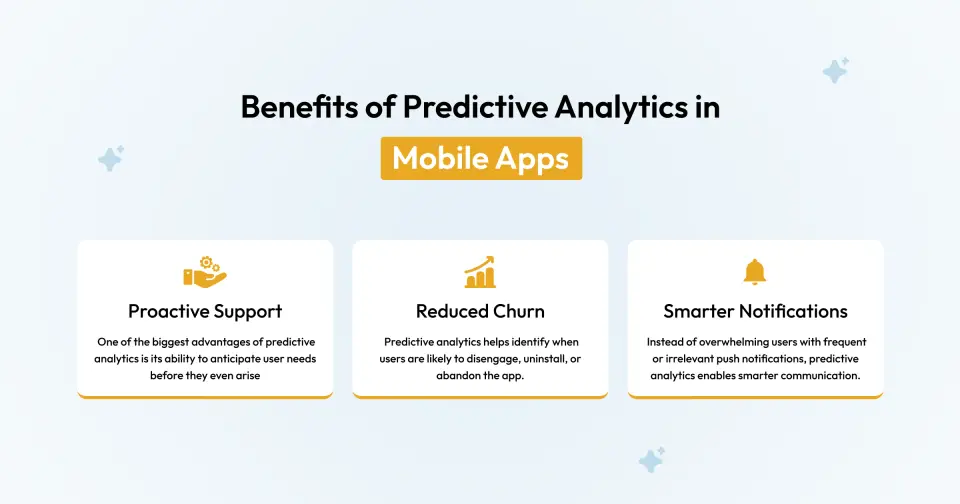
Benefits of Predictive Analytics in Mobile Apps
Proactive Support :
One of the biggest advantages of predictive analytics is its ability to anticipate user needs before they even arise. Instead of waiting for users to take action or run into problems, mobile apps can proactively suggest helpful features, reminders, or content based on behavior patterns.
Reduced Churn :
Predictive analytics helps identify when users are likely to disengage, uninstall, or abandon the app. By analyzing patterns like reduced activity, slower session times, or skipped features, AI models can flag at-risk users in advance. With this insight, apps can intervene early, offering personalized incentives, check-ins, or relevant content to re-engage users before it’s too late.
Smarter Notifications :
Instead of overwhelming users with frequent or irrelevant push notifications, predictive analytics enables smarter communication. By understanding user habits, preferences, and timing, apps can send notifications that are timely, personalized, and meaningful. Whether it's suggesting a new product, reminding a user about an unfinished task, or offering a special deal, predictive insights ensure that messages are well-received, not ignored or turned off.
Voice AI with Advanced Natural Language Processing (NLP)
Voice interaction is now a standard feature in mobile apps, and in 2025, Voice AI powered by advanced Natural Language Processing (NLP) is leading the charge in innovation. These systems understand context, emotion, and intent more accurately than ever before, enabling more natural, human-like conversations that enhance accessibility, productivity, and user satisfaction.
Benefits of Voice AI with Advanced NLP in Mobile Apps
Hands-Free Convenience
Voice AI offers seamless hands-free interaction, which is essential for users who are multitasking, driving, or have accessibility needs. It allows users to interact with apps without touching the screen, making the experience faster and safer in real-time scenarios.
Natural Communication
Speaking is often more intuitive and quicker than typing, especially for complex queries. Advanced NLP enables apps to understand natural language, context, and even informal speech, making voice commands feel more human and less robotic.
Enhanced User Trust and Engagement
Conversational interfaces build rapport with users by mimicking real conversations. When an app responds intelligently and empathetically through voice, users feel understood and are more likely to trust and continue using the app.
Why These AI Trends in Mobile App Development Matter in 2025
Businesses that adopt these trends stand to gain a significant competitive edge. AI-driven mobile apps:
- Offer richer and more intuitive user experiences.
- Reduce operational costs through automation.
- Unlock new revenue opportunities through better targeting.
Whether you're building an app for consumers, employees, or enterprise use, integrating these AI trends ensures relevance, scalability, and long-term value.
Conclusion
As we look ahead to 2025, the integration of AI in mobile app development is not just a trend but a necessity for businesses aiming to stay competitive. Advancements in emotional intelligence, hyper-personalization, predictive analytics, and voice AI are redefining user experiences, making them more engaging, intuitive, and responsive.
At Immersive Mobile Designs, we help businesses harness these AI trends to boost user satisfaction, drive loyalty, and ensure long-term success. Partner with us to future-proof your mobile apps.